


The Christian’s participation in Halloween has been debated for as long as I can remember. But, for some reason, it feels like the debate is a bit harsher this year.
I first saw the following meme going around a few weeks ago, and I have to tell you, I don’t appreciate it.
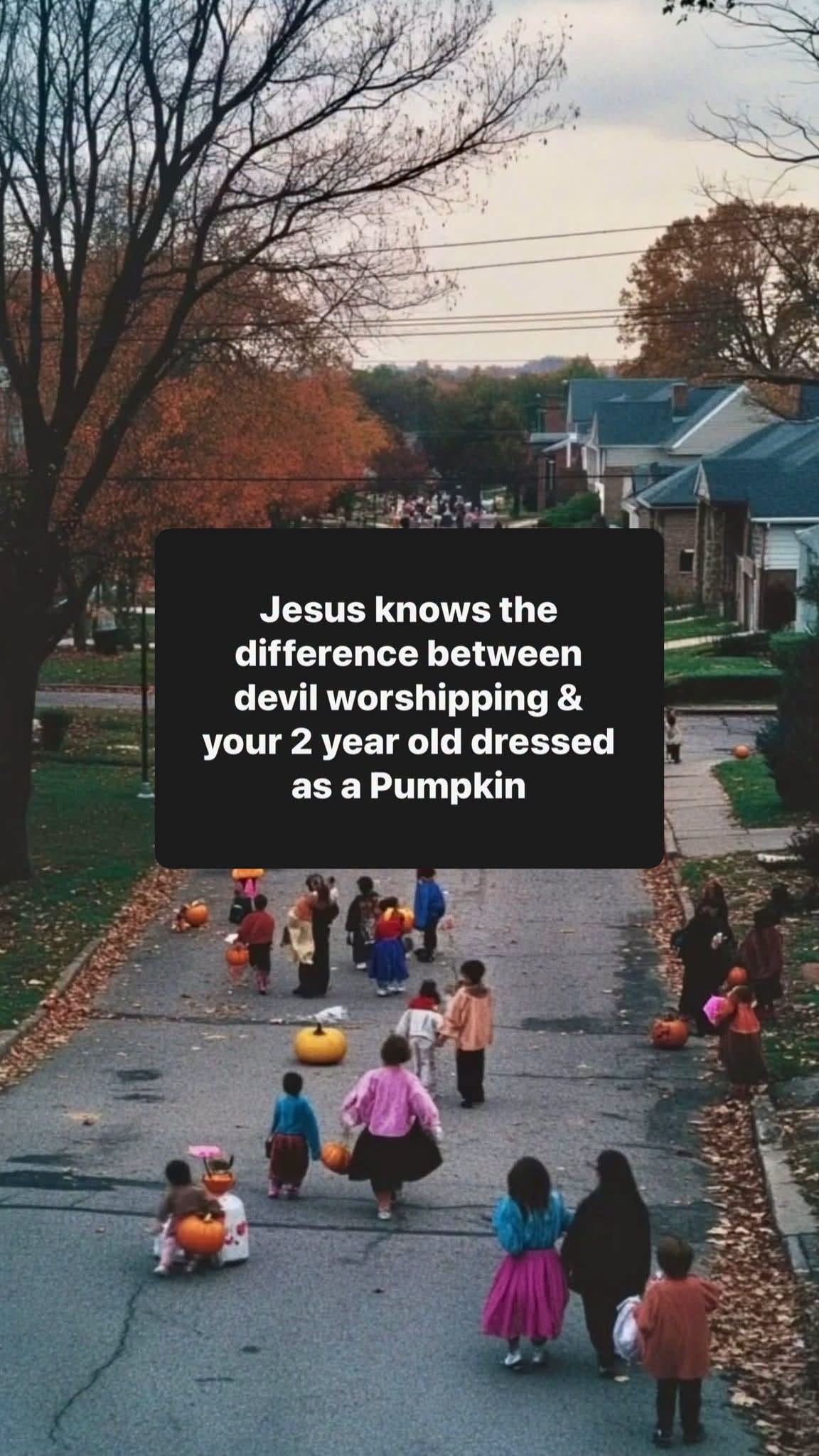
“Jesus knows the difference between devil worshipping and your 2 year old dressed as a pumpkin.”
You can almost feel the eye-rolling as the person typed that sentence.
But, the condescension certainly doesn’t run in only one direction. On the other side, we find posts like this:
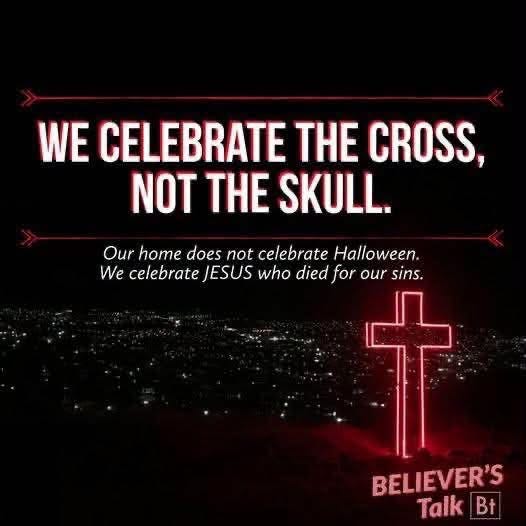
“We celebrate the cross, not the skull. Our home does not celebrate Halloween. We celebrate JESUS, who died for our sins.”
In both cases we see rather uncharitable mischaracterizations of the other side, and Christians shouldn’t act that way toward each other.
The first one reduces a long list of reasons why someone might oppose celebrating the day down to a complaint about toddlers in pumpkin suits. The second presents a false dichotomy between celebrating Jesus, or celebrating “skulls”—whatever that means. In both cases, it’s ridiculous, self-righteous, and unloving.
This actually provides a great opportunity to see how we should navigate differing opinions in the church.
Thankfully, God gave us Romans 14 for times like these, when one side is morally convicted that they shouldn’t do something, and the other side has no problem with it. What’s the solution? Leave each other alone, and respect each other’s convictions.
Those who celebrate will be tempted to view those who don’t as having a frivolous complaint based on a lack of knowledge. A contempt grows for those who they see as being wound too tightly. Thats what the first meme obviously shows.
But that’s also exactly what Paul told that party not to do. 14:1 says not to pass judgment on their opinions, and 14:3 says not to view them with contempt. Rather than rolling one’s eyes at the restrictive brother, we are to let him have his opinion and refrain from making him stumble (14:13).
On the other hand, those who don’t celebrate will be tempted to judge those who do as being less spiritually serious than they are. That is what I see coming through in the second meme above.
Of course, this was also addressed by the apostle. 14:3 tells this group not to judge the other, and 14:4 reminds them that those who celebrate answer to God, not them.
So, this shouldn’t be hard. We have to develop the skill of staying on the same team even when we disagree about some things.
What Romans 14 doesn’t say
Notice that the chapter tells us how to navigate disagreements, which is much different than telling us to silence our disagreements. It’s healthy for us to hear out each other’s arguments and love each other enough to continue on alongside each other with no hard feelings.
Unfortunately, too often we think we only have those two choices.
We either fight to the death on a subject, or dismiss it as “not a salvation issue” that is therefore unworthy of dialogue lest it escalate into a fight.
This is just immaturity on display. We shouldn’t be afraid of or allergic to disagreement. It is good for us to think through our beliefs, hear out our brother’s differing beliefs, grasp their point of view in a way they would endorse—and not as a straw man—and then come to our conclusion.
Instead, many just demand we avoid discussing non-bindable issues like these, while others put out snarky, holier-than-thou memes to take shots at each other. How are those options better?

When we can talk these things out, it becomes clear when both parties are doing their best to glorify God, even though we may reach different conclusions. That helps us build grace, patience, and appreciation toward each other.
Romans 14:6 reminds us to see each other this way: “He who observes the day, observes it for the Lord, and he who eats, does so for the Lord, for he gives thanks to God; and he who eats not, for the Lord he does not eat, and gives thanks to God.”
In my calculation, the best way to do that is to have the discussion, openly disagree with each other, and then finish in a place of love and respect.
We don’t need to mock each other with memes. We need to love each other enough to talk it out.
In my experience, the people who refrain from Halloween often do so because they take God very seriously, and they are deeply uncomfortable with so much of what is and has been celebrated on Halloween, with all the gore, death, witchcraft, and horror.
Even if you disagree, how can you not at least see where they’re coming from when you drive past a front yard that’s adorned like a blood-soaked zombie movie?
On the other hand, the people who do celebrate generally don’t do so because they’re in favor of all those dark things. Many times, they just see it as a fun time for kids to dress up as their favorite characters, share some candy, and enjoy what has long been a childhood rite of passage in our culture.
Once again, it’s easy to see where they’re coming from.
So whether your kid will be gathering candy as Spider-Man or Bluey this weekend, or whether they’ll be sitting this one out, let’s stay united in a shared desire to glorify God, even if we don’t always agree on the best way to do it.
Notes
Early bird pricing for Men’s Excellence Workshop ends early next week, so be sure to sign up today! Get all the info you need at the link below.
Our Think Deeper episode on Halloween from our first year remains one of our favorites, as there was a good bit of lively debate about celebrating the day. Check it out below if you’d like to hear the argument from each side.

You make an interesting application of Romans 14. I agree that Halloween is among those debatable issues where there can be different convictions. "Respect each other’s convictions," is good advice.
Romans 14 is not in the context of the gathering together as the body of Christ on the 1st Day of the week.